Step 1: Know How Head Lice Spread
Before you start treatment, understand how your child could have gotten head lice. Head lice don’t jump, they don’t live on pets and they have nothing to do with personal hygiene. The most common way head lice spread is by head-to-head contact. This means your child must have been touching heads with someone who has head lice. This may happen during sports, slumber parties or play time in or outside of school.
A less likely way to get head lice is by sharing personal items that touch the head, such as hats, hair brushes and hair accessories. Head lice need to have a blood meal every 12 to 24 hours, so they can’t survive away from a human head for longer than a day.
Step 2: Contain the Problem
Once your child comes home with a confirmed case of head lice, take steps to prevent lice from spreading to other family members.
- Avoid hugging or other close contact.
- Check other kids and adults in your household for head lice.
- Often, by the time you get a call from a school nurse, your child has had head lice for a while. Your whole family may need to be treated to prevent reinfestation.
Washing hats, pillow cases and similar items that touch the head in hot water may help contain head lice. However, disinfecting your house is not necessary because the transmission of head lice from inanimate objects is rare.
Step 3: Understand the Life Cycle of a Head Louse
To properly treat head lice, you need to understand your enemy. Head lice can be found in one or more of these forms:
- Head lice eggs (nits) are firmly attached to the base of the hair. They may look like dandruff, but if you examine them with a magnifying glass, you can see that nits are oval-shaped and not flat.
- The egg produces a nymph, which has a greyish-white color and goes through three stages before becoming an adult.
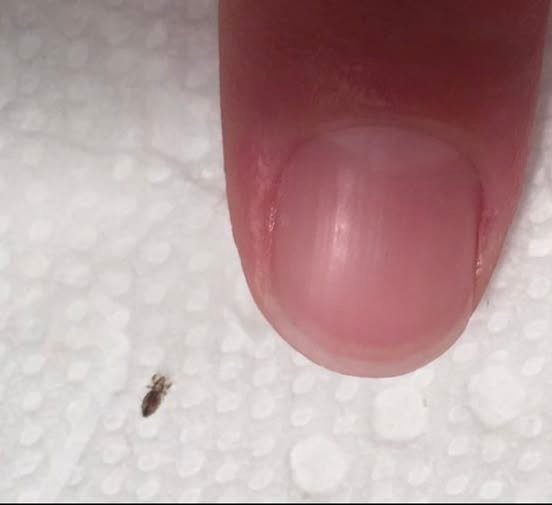
- Adult head lice are tan-colored and can be seen moving quickly along the hair or across the scalp.
All three generations of head lice need to be nonviable, or dead, to get rid of head lice for good.
Step 4: Consider ‘Destruction of Habitat’
Head lice need a human host to survive. If the hair is gone, so are head lice. While cutting a child’s hair may seem like an extreme solution, it may be a viable course of action for some parents. If your child already gets short haircuts, it may make sense for you to deal with head lice by destroying their habitat.
Step 5: Learn How Over-the-Counter Head Lice Treatments Work
Your first line of defense against head lice is an over-the-counter (OTC) head lice treatment that typically comes in the form of shampoo. The main difference between various products is the active ingredient and which stages of head lice it kills. Most OTC head lice treatments don’t kill nits, so a second application may be necessary to kill the nymphs once they hatch.
Some OTC head lice treatments use pyrethrins as the active ingredient. Pyrethrins naturally occur in flowers of the Compositae (Asteraceae) family like chrysanthemums, also known as mums or chrysanths. If your child is allergic to these flowers, he or she may also be allergic to the head lice treatment that uses pyrethrins.
Step 6: Apply the Treatment as Directed
One of the reasons over-the-counter head lice treatments don’t work is because they are not used as directed. Parents may split one dose into several applications or otherwise deviate from the directions. You shouldn’t see any crawling head lice after the first treatment if you applied it correctly. If you are still seeing live crawlers, then you may have missed a step or the treatment is not effective against the type of lice your child has.
Additional Tips for Getting Rid of Head Lice
Seek Professional Help
Some parents turn to home remedies for head lice, such as tea tree oil, mayonnaise, neem oil, vinegar, saline spray and many others. These treatments are messy, time consuming and not supported by scientific evidence. If you tried an OTC head lice treatment that didn’t work and you are certain that your child didn’t get reinfested, seek professional help.
It’s possible that you are dealing with head lice that are resistant to the active ingredient in your treatment product. Consult with your pediatrician or contact a pediatric dermatologist for a prescription head lice treatment.
Don’t Obsess Over Nits
Generally, if no live crawling insects are seen three weeks after the treatment, it’s safe to assume that they are gone. Nits would have hatched by that time if they were alive. Nits and their shells may remain in the hair for some time but won’t be viable.
Many prescription head lice treatments target nits along with adult head lice. If you used a product like this, no combing is necessary unless you can’t wait to get rid of the dead shells.
Keep an Eye on Head Scratching
Unfortunately, there is no proven head lice deterrent that will prevent your child from getting head lice again. The best you can do is stay alert for suspicious head scratching. Itching is an allergic reaction to chemicals in a head louse’s saliva. Not all kids will experience itching right away, but if they have had head lice before, they are more likely to start itching sooner. Catching this behavior early and treating it will help you stop a head lice problem at its roots.