Let’s see who can save you. A tattooed stranger ripped a waitress’s shirt, but Hell’s Angels saw it. The glass exploded into a thousand glittering teeth, and the jukebox hiccuped into silence as if it too felt fear. Neon from the window sign flickered in jagged rhythms across the floor, red, blue, red, like a distant patrol car. The old bar in Reno had seen its share of storms, dust, debt, and desperate men. But this was the kind that started inside a person and spread to everyone around them.
Lucy stood in the middle of it, one hand still poised above the tray as if time might rewind and let her save the tumbler before it fell. She was 21, slight as a willow, but stubborn in her bones. Her shirt’s top button had snapped. She hadn’t felt it go. Only the cold air and the shame rush in all at once. The man who grabbed her wrist smiled with the slow cruelty of a person who needed someone smaller to prove he was big.
Come on, sweetheart. He slurred. Let’s see who can save you now. For a heartbeat, Lucy’s mind left the bar. She saw a thin boy with unruly hair hunched over an algebra book at their kitchen table. Her brother Jaime. She saw the bills on the counter, the notes she’d scribbled about tuition deadlines, the sticky note that read, “We’ve got this.” Then the bar swam back into focus, and the man’s fingers dug into her wrist. A chair screeched across the floor.
From the corner booth, a tall figure rose like he’d been expecting this all night. Leather jackets scuffed and heavy. Patches frayed from a thousand miles. Tattoos ran like old road maps down his hands and disappeared under his sleeves. The flaming skull and red wings on his back caught the neon and almost moved. Ryder didn’t hurry. He never did. He walked through the sudden silence with a patience shaped by bad choices and worse nights. by memories that could still punch the breath out of him when he was alone with the engine off.
His brothers, three men in black leather, uncoiled from the booth behind him and stood. No one reached for bottles. No one cracked a joke. The bar’s air shifted as though it were bracing. “You picked the wrong bar tonight,” Ryder said, voice low enough to be mistaken for calm. Then, softer like an oath. Son and the wrong girl. The drunk laughed, the kind of laugh that mistakes mercy for weakness. What are you going to do, old man? He used his free hand to tighten his grip on Lucy’s wrist, and pain burned up her arm.
Ryder’s fist answered. It wasn’t pretty. It wasn’t theatrical. It was a single clean line from decision to consequence. The man’s chin snapped sideways. His body lagged behind. Then the floor came up fast. The sound of his fall knocked loose the music in the jukebox. One strangled note, then nothing. Lucy gasped. It wasn’t fear that filled her eyes so much as a stunned grief. The grief of someone who’d been moving through life on willpower alone and had just been reminded that kindness could appear without being begged for.
She clutched the broken button in the edge of her dignity and tried not to cry. Ryder shrugged off his jacket and set it across her shoulders as carefully as he might lay a blanket over a sleeping child. Nobody touches you like that again, he said. And though he didn’t raise his voice, everyone heard him. Not while I’m breathing. His brothers, Ghost, Huck, and Diego, formed a loose half circle without needing to be told. Bodies placed not to threaten the bar, but to give Lucy a perimeter.
The bartender, an older woman named Myrtle with forearms like oak branches, picked up the phone to call the cops. The drunk on the floor groaned, rolled, tried to find the swagger he’d spilled all over the tiles and found none. “Cameras saw it,” Myrtle murmured to Ryder, nodding toward the black dome above the bar. Ryder nodded back. “Good,” he looked down at the man. “Stay put.” He wasn’t a hero, not in his head. He’d been the bad weather more than once, and some nights the old thunder still shook him.
But there are moments when a person remembers a version of himself he wishes he could have been. And in those moments, if you move fast enough, you can be him for someone else. Outside, a siren complained from far off. Myrtle slid a fresh water toward Lucy and another to Ryder, who didn’t drink it. He watched Lucy’s hands instead, how they steadied around the glass, how they trembled and then didn’t. “You okay, kid?” he asked. “I will be,” she said.
“Thank you,” he nodded. No speeches, no swagger, just a quiet placing back of something that had been taken from her and a promise in the way he stood that said, “I saw what happened. It won’t happen again.” When the police arrived, Ryder sat at the table and told the truth. He didn’t make it prettier. He didn’t make it worse. “It is what it is,” he said, and Myrtle backed him, and the cameras did the rest. The drunk ended up in the back of the cruiser, suddenly very small behind the glass.
As the red blue tails of the patrol car disappeared, the jukebox woke up again, embarrassed, and coughed out the middle of an old song about second chances. The bar exhaled. Conversation came back tentative and thin, like a bird creeping from a hedge after a hawk passes overhead. Ryder picked up his jacket from Lucy’s shoulders and hesitated. Keep it for now if you want. Lucy looked down at the heavy leather, the weight like a shield. I’ll bring it back, she said.
And something else. Don’t worry about it, he said. But she already had. That night, Lucy walked home in the desert dark, the jacket around her like someone’s promise. At the apartment, Jaime looked up from the kitchen table, eyes wide. “You’re late,” he said. Then he saw the stiffness in her posture, the missing button. loose. It’s okay, she said. I’m okay. She set the jacket over a chair and told him the short version. She left out the worst of it, not because she didn’t trust him with the truth, but because she wanted to hand him a world where good men stood up when they were needed.
Hell’s Angels, he whispered like it was a myth. Just men, she said. Just people who made sure I got to come home. They stood in the kitchen longer than they needed to. Later, when Jaime went to bed, Lucy took the jacket to the couch and sat with it in her lap. The leather smelled of dust, oil, and long roads. Her hands traced the stitches like reading a braille map back to herself. She had been saving every spare dollar.
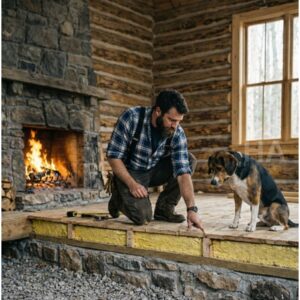
For Jaime, for the future, something tight in her chest loosened just enough to let a different kind of plan in. She got out flour and sugar. It was 2:00 in the morning, and she had a pie to make. Ryder’s garage lived behind a chainlink fence one block from the train tracks. A place where engines came to confess their sins and leave running a little cleaner. The men had names on the street. Ghost for the one who’d walk into trouble like it forgot to scare him.
Huck for the one who’d try any new thing twice. Diego for the one who read poems when he assumed no one was looking. But in the garage, they were just hands and tools and grease. The desert light pulled in the doorway and stopped there as if the darkness inside needed its privacy. Ryder came early when the world was quiet, and the ache from old scars spoke softer. He rolled up the bay door and let the morning in.
The bike under the tarp waited like a confession. He’d been rebuilding it piece by piece, not to sell, not to ride, though he’d ride it so much as to keep his hands busy while his mind earned its rest. A knock at the open door was small and careful, as if asking the air for permission. Lucy stood there with a brown paper bag clutched to her chest. The jacket was folded over her arm. She’d worn her courage like a belt, cinched, tight, and simple, and beneath it, he could see the nerves.
“You didn’t have to,” he started. “I know,” she said quickly. She set the bag on the workbench and pushed it toward him. It’s apple. My nana’s recipe, but I messed with the spices because I didn’t have enough nutmeg and the grocery store replaced my order with paprika once, so now I don’t trust them. Anyway, it’s pie. He stared at it for a second longer than necessary. Not because it was pie, but because it was the history inside the pie.
The late night, the flower on her elbows, the decision to do a small good thing. The jacket on her arm looked odd there, like it had made a home and was not sure about leaving it. You didn’t have to, he said again, softer. I wanted to thank you, she said, not just for what you did. For reminding me I’m not invisible. He didn’t know where people put words like that. He knew where to put bolts and bearings.
Knew the torque for head gasket bolts and how to listen for a failing lifter. But gratitude like this didn’t fit neatly on any shelf. He opened the bag to do something with his hands. The pie smelled like a kitchen that wasn’t rushed for the first time in a long time. “Coffee?” he asked. “Yes,” she said with relief, like he’d thrown her a rope. They drank it from mismatched mugs next to the bike while mourning bruised into day.
She asked about engines like they were poems. He talked about timing and fuel and the way a machine will teach you how to treat it if you’re quiet long enough. She talked about double shifts and hope like a stubborn tooth that wouldn’t fall out even when the world tried to knock it loose. Ghost wandered in, saw the pie, and nodded at Lucy like she’d passed an unspoken test. Huck followed, took one look at the careful lattice on top.
And said, “That’s a strong weave, ma’am.” Diego arrived last, carrying a donated box of canned goods from a local church, set it down, and pretended not to notice how the garage felt different with a good thing in it. Keep the jacket for now, Ryder said as Lucy stood to go. You said that last time, she smiled. I might say it again, he said. She laughed and the garage windows felt a little cleaner. Word travels across a town in small, honest ways.
It moved through the bar, tempered by Myrtle’s eyebrow. It moved along the rails, carried by men who worked nights and saw things they didn’t always want to keep. It moved into the pockets of people who’d stopped believing in clean endings and found to their surprise that tidy wasn’t the only kind of good. By the end of the week, Lucy had started stopping by the garage on her way to the bar, then again on her way home. She brought coffee when she could afford it, cookies on a good night, silence when neither of those fit.
She folded flyers for a charity ride Huck was organizing to raise money for a homeless shelter on the west side and talked a local bakery into donating day old bread for the event. “You’re dangerous,” Diego said after she convinced a part supplier to extend the garage credit terms. “Weaponized kindness. ” “Tell that to my bank account,” she said. “They’re unmoved.” Ryder watched this, not from the doorway like a distant guardian, but from the middle of it, sleeves rolled, hands black with grease, learning to let grace sit without argument.
He didn’t call what he felt redemption. He’d learned not to give big names to fragile things, but he started sleeping through the night more often. He found himself moving slower, not from tiredness, but from the impulse to look at what was around him. Lucy’s brother. Jaime arrived on a Saturday with a grateful hand and the shyness of a kid who’d grown too fast. Ryder showed him how to change oil and didn’t mention tuition until Jaime did. “I’ll cover what I can,” Ryder said, and Jaime tried to refuse on instinct.
Ryder didn’t push it. “I’ve had help, kid,” he said. “You’ll pass it on when it’s your turn.” “Is it okay that he’s here?” Lucy asked later when Jaime had gone. This ain’t the worst place a kid can learn that tough and gentle can share the same room. Ryder said long as he keeps his head in his grades, she nodded. That stubborn joy back in her eyes. He’s good, she said. He deserves good. The nickname came out of nowhere.
Huck tossed it into the air and it stuck. Lil Angel, he called across the garage as Lucy balanced a stack of soup cans taller than her forearm. She rolled her eyes, but the smile spoke acceptance. The patch on Ryder’s back had never looked like the chapel window that folks made it into. Now seeing Lucy in the garage, it felt less like a warning and more like a promise. We know what we are capable of. We also know what we choose.
On a windless night, the club gathered for the charity run. Bikes lined the block like steel prayers. Myrtle set out a pot of chili that could cure at least three kinds of heartbreak. Diego read a few lines he claimed he found on a flyer, but had obviously written himself. If the road teaches anything, it’s that going forward is only half the work. The other half is who you carry. They rode slow through the city. Engines low and unified, not like a threat, but like a heartbeat winding through neighborhoods that had forgotten the sound of a convoy that meant good.
They stopped at the veteran’s home, where a man with shaky hands saluted Lucy because he didn’t know where else to put the gratitude. She returned the salute sharp enough to make him sit up straighter. Ryder wrote point, his mind quiet in the way it gets when a person finds the right pace after a season of running too hard. He didn’t analyze what Lucy had done to the garage, to the men, to him. He didn’t need to. Some changes don’t benefit from autopsy.
They benefit from being lived. The phone call about the drunk man’s release came on a Tuesday when the wind shoved dust against the storefronts like a dare. Myrtle told Lucy with a bartender’s grace. Facts first, feelings after if they need them. I figured it would be soon, Lucy said. Her hands went to the jacket’s collar where she’d mended the missing button with the kind of stitch taught by grandmothers and necessity. We can keep an eye on the door, Myrtle said.
He doesn’t get to keep all the rooms in my head, Lucy said. Not all of them. Good, Myrtle said. But we can put a couch outside the door anyway. Lucy laughed, a sound that leaned into the future. He walked back into the bar like a man expecting to carry the past in one hand and reorder the present with the other. The drunk, bolder in daylight, quieter in his eyes, wore a jacket that tried too hard to imply control.
Silence filtered through the room and pulled at his feet. Lucy saw him and felt a cold thread snake up her spine. She followed it with breath, unnotted it slowly, and let it slip. She didn’t move toward the phone. She didn’t look for Ryder. She sat down the tray, wiped her hands on a towel, and stepped out from behind the bar. “Let’s talk,” she said, voice steady, his jaw twitched, a small animal unsure whether to run. “I’m not here for trouble,” he muttered.
“Good,” she said. “Neither am I.” They stood in the room that had watched violence try to take shape and then fail, that had learned alongside Lucy how to make space for a new ending. People turned their bodies so they could pretend not to stare while ensuring they didn’t miss a word. “You don’t scare me anymore,” Lucy said. She didn’t spit it like vengeance. She laid it down like a stone she’d carried far enough. “Because I learned something you don’t understand.
Real men protect. Real strength forgives. ” He flinched at the word forgives like it was an accusation. “Maybe it was. Maybe it was a mercy he’d never been offered and didn’t know what to do with. His eyes slid off hers to the floor, then to the door. He swallowed hard, and for a second she saw not a monster, but a man who had mistaken his worst impulses for himself. “I’m sorry,” he said quiet. “Be better,” she said.
“Somewhere else,” he nodded. Then he left. The door closed behind him, and the room stayed quiet for one long breath. “Then it exhaled.” Myrtle put a glass of water on the bar in front of Lucy without meaning to make a ceremony of it. And Lucy drank, not because she was thirsty, but because the body needs simple rituals after a complicated victory. The bikers arrived 20 seconds later, the kind of late that implies discipline rather than failure. Ryder stopped at the threshold, read the room, found Lucy with his eyes, and nodded once.
“You did it?” she nodded back. “We did it. You sure?” ghost asked under his breath, scanning the street. I’m sure, Lucy said. He doesn’t live in here anymore. She tapped her temple, then her sternum. Or here, Ryder stood near her without crowding. He wanted to say a dozen things and none. She saved him the trouble. Walk me outside, she asked. They stepped into a sunset that had the courtesy to show up on time. Reno’s sky spread out in bruised oranges and shy pinks, and the small wind felt like a grateful dog nudging an offered hand.
The bikes lay in a patient row, chrome catching fire light. Each machine a promise of motion and return. You saved me once, Lucy said, eyes on the horizon. Her voice wasn’t tremulous now. It had the iron of a woman who had walked herself back to herself that night. Nah, he said. I gave you a second to catch your breath. She smiled. You also gave me a family. He let that sit. Sometimes you walk into a room the world says is full of monsters, he said.
and you find out it’s just full of people who remember what it was like to be a person because somebody looked at them like they still were. She watched the last light catch on the wings, stitched into his patch and thought of all the names people threw at men like him. Outlaw, thug, danger. She thought of Jimmy at the veteran’s home crying into a cup of chili because someone remembered his birthday. She thought of Diego’s quiet poems, ghosts steady back, Huck’s wild grin.
She thought of the pie cooling at 2:00 a.m. under a buzzing fridge bulb. Sometimes the people society fears the most, she said, borrowing a thought she’d been carrying, are the ones who still believe in doing what’s right. Ryder nodded. And sometimes, he added, “The moment someone tries to break you is the same moment you find out you don’t break that way.” They stood until the sun took the last of itself behind the low roofs and left the bikes to glow like embers.
The weeks that followed didn’t turn into a fairy tale because fairy tales end fast and badly for the ones who think they’ve earned peace. Real life kept its habits. Rent due, engines failing, a kid at the shelter who needed a ride to a job interview, a broken heart in booth 4 that could only be mended by time and Myrtle’s pragmatic advice. But the garage changed in the ordinary ways that matter most. A bulletin board appeared with flyers for GED classes and court dates written in block letters so nobody would forget.
The coffee pot developed a rhythm. Someone, no one confessed, started leaving notes under the filters with words like breathe and onward and call your sister. Jaime built a spreadsheet to track every charity dollar and rode shotgun with Huck to deliver blankets. When the nights got mean, Lucy’s pie recipe mutated across the block until half the town claimed some version of it as their grandmothers. On Fridays, she brought a stack of foil wrapped slices, each labeled with a name.
It’s a roa, she insisted, shoving one into ghosts hands. We keep the men who fix the machines fed or the machines will get fussy. Ryder sailed through a hundred small storms in that time and began to notice each had a quiet eye when Lucy was near. He didn’t ask God for anything. He didn’t bargain with the universe. He just woke and worked and tried to keep a promise he hadn’t quite said out loud. Be the kind of man who makes it safer for others to be brave.
One late afternoon, as a storm stacked blue gray blocks over the mountains, Lucy locked the bar’s side door and found Ryder waiting outside with two helmets. “Ride,” he said. “Thought you’d never ask,” she said. and her grin was 19 years old for a second before it returned to 21. More deliberate, more earned, they took the river road that nurses the city’s edge, a spine of pavement that knows a thousand goodbyes and a thousand returns. The wind peeled back the day.
The engine’s hum sat between her ribs and calmed something that had trembled there for months. They crossed the old trestle bridge and watched the water shoulder past the pylons with patient insistence. Ryder didn’t talk much on rides. He didn’t have to. The road has its own grammar, punctuation and mile markers, pronouns in lane changes, paragraphs in the switchbacks. At an overlook where the world widened just in case someone needed convincing, they stopped and listened to a quiet that could be measured for once in miles rather than fear.
I used to think strength meant not needing anyone, Lucy said, chin propped on the helmet in her lap. Now I think it means knowing who to call. Ryder squinted into the wind like it had said something he was still translating. It means being the one who shows up when called, he said. They rode back as the first heavy drop smacked the road and found home in the rhythm of a garage door sliding up in a warm light inside.
Months turn into measures of trust if you give them jobs to do. Lucy finished one semester’s worth of prerequisites on a patchwork of scholarships Ryder refused to take credit for. Jaime learned torque specs and the Darcy Weissbach equation because Diego insisted a man should know how the world moves water and not just oil. Myrtle pretended she didn’t cry when Huck presented her with an apron that read bar mom in shaky embroidery. No one called themselves heroes. There were no capes.
There were leather and scars, old knuckles, new calluses, and the kind of forgiveness that doesn’t erase anything yet refuses to let pain be the last author of the story. One evening, purple dusk, leaning hard against the garage windows, Lucy stood with Ryder at the mouth of the bay, where the street met the light. The bikes lined up with a patience that always made her think of faith. The city exhaled end of day worries and inhaled a softer version of itself.
You saved me once, she said quietly. Nah, Ryder said. He didn’t look at her because some truths are easier to say to the air. You saved us. You walked in here like a bell and reminded us we were supposed to answer to something besides our worst days. She leaned her shoulder against his, not touching enough to make a point enough to acknowledge one. “Then let’s keep saving each other,” she said. “Deal,” he said. They watched the street for a while, long enough to feel it choose a gentler speed.
Long enough to believe that even in a place like this, with its hard corners and long shadows, someone could call out for help and be heard above them. The old clock over Myrtle’s bar blinked past midnight and red digits that didn’t judge, only counted. Counted nights since the shattering. Counted pies baked at impossible hours. Counted miles of charity rides and the number of times someone had said, “I got you.” and meant it. Sometimes heroes wear leather and scars instead of capes.
Sometimes the people society fears the most are the ones who stop a hand in motion and set a life upright. Sometimes the moment someone tries to break you is the same moment you discover your strength. And if you’re lucky, you discover a family built from the fierce quiet of people who chose to stand. Lucy adjusted the collar of a jacket that had come to fit like truth. Ryder checked the line of bikes like a surgeon checking instruments before a hard operation.
The desert knight rose up to meet them, not as a threat now, but as a place that could be crossed together. Engines turned, voices softened, and the road as always waited without judgment. If this story moved you even a little, hit the hype button, subscribe to Biker Hype, and share this video with your friends. Every share helps us tell more stories about courage, found family, and the kind of strength that protects.