“Dad Said I Wasn’t Half a Man—So I Set the Truth on Fire and Watched Our Perfect Family Crack Open”
The first time my father said it, I was twelve.
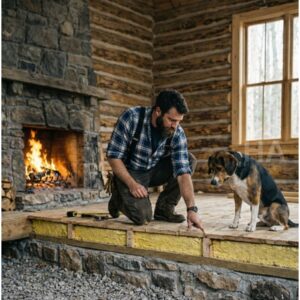
We were in the garage—his kingdom of oil stains and power tools and rules that didn’t come with explanations. My brother, Aaron, held a flashlight steady like a surgeon, the beam perfectly aligned with the bolt Dad pointed at. I held my own flashlight like a kid. It wobbled. My wrist got tired. The light slipped.
Dad’s knuckles hit the hood with a sharp crack.
“Are you asleep?” he snapped.
“I’m trying,” I said, voice thin.
Aaron didn’t look at me. He didn’t have to. He’d already learned the trick: don’t become the target. Become the assistant.
Dad leaned closer, his shadow swallowing mine. “You’re not half the man your brother is.”
It landed like a cold coin dropped into my stomach.
Aaron’s lips pressed together—almost a wince, almost sympathy, almost something. Then he adjusted the beam and Dad’s shoulders loosened, like the world had corrected itself.
In that garage, I learned the shape of our family: Aaron was the straight line Dad could measure pride against. I was the crooked nail that bent when you tried to force it.
The second time Dad said it, I was eighteen.
The third time, I was twenty-seven, standing in my childhood kitchen with a mug of coffee I didn’t taste, staring at my father across a table scarred with years of slammed plates and unsaid apologies.
And this time, something inside me didn’t shrink.
It sharpened.
Because the words weren’t just an insult anymore. They were a sentence. A life I was supposed to accept. A role I was expected to play until the day Dad was gone, and Aaron inherited the throne.
“You hear me?” Dad said. “Aaron has a career. Aaron has a future. You’re still… drifting.”
I stared at him. At the vein in his temple that appeared when he wanted to win. At the way he always talked about my life like it was a broken appliance.
I should’ve said something calm. Something polite. Something small.

Instead, I set my mug down very carefully, because my hands had started to shake.
“You ever wonder why Aaron looks so perfect?” I asked.
Dad blinked, suspicious. “What kind of question is that?”
“The kind that finally matters.”
Aaron wasn’t there yet. He was always late when it was inconvenient. It used to drive Dad crazy—until Aaron learned to be late in a way that made people forgive him. He’d show up with a grin, a story, a compliment. A talent for sliding out of consequences like they were wet shoes.
Me? If I arrived five minutes late, Dad treated it like proof I was failing at being a person.
Dad leaned back in his chair, crossing his arms. “Don’t start.”
“Don’t start what?” I asked. “Talking? Thinking? Not pretending?”
Dad’s eyes narrowed. “You always want to be the victim.”
The word victim would’ve cut me years ago. Now it just sounded lazy—something people said when they didn’t want to look too closely at what they’d done.
“I don’t want to be the victim,” I said. “I want to be finished.”
Dad’s jaw tightened. “Then stop acting like you’re owed something.”
“I’m not owed anything,” I said. “But I’m done being compared to a ghost you invented.”
Dad slammed his palm on the table. The mug jumped. Coffee rippled up the sides.
“Don’t you dare,” he said, voice rising. “Your brother worked for everything he has.”
I almost laughed. Not because it was funny. Because it was unreal how hard Dad was clinging to a story that made him feel right.
“You sure about that?” I asked.
Dad stood. His chair scraped the floor like a warning. “Aaron isn’t like you.”
I stood too.
He stepped closer. I could smell his aftershave—sharp, familiar, like a memory that never learned to soften.
“Say it again,” I told him.
Dad’s eyes flashed. “You’re not half—”
A knock hit the front door before he could finish.
It was loud enough to interrupt the moment, like fate had tossed a rock through the window of our argument.
Dad didn’t move. He held my gaze like he wanted to win with silence.
The knock came again—harder, impatient.
I broke eye contact first, not because I lost, but because I realized something: if I stayed focused on Dad, I’d miss the real problem walking into the house.
I went to the door.
And when I opened it, the cold air rushed in like an intruder—and so did Aaron.
He stood on the porch in a tailored coat that cost more than my monthly rent. Hair perfect. Smile ready. Eyes bright in that practiced way that made strangers trust him.
But there was something else too.
A tightness near his mouth. A small tremor in his fingers when he adjusted his cuff.
Fear, disguised as charm.
“Little brother,” Aaron said, like I was a friendly detail in his life. “Hey. Is Dad home?”
Dad’s boots thudded behind me. “Aaron!”
The warmth in Dad’s voice was instant. Automatic. Like a switch.
Aaron stepped inside and hugged Dad—an easy, confident embrace. When Dad held him, it looked like relief.
“Sorry I’m late,” Aaron said. “Meeting ran long.”
Dad waved it off. “You’re here now. That’s what matters.”
Aaron’s gaze slid to me. His smile held for half a second too long.
Then his eyes flicked away—toward the hallway, toward the back of the house—as if he expected something to follow him in.
I closed the door.
Something in my gut tightened again.
Aaron cleared his throat. “We should talk.”
Dad nodded immediately. “Of course. Sit down.”
Aaron didn’t sit. He paced, slow circles on the worn kitchen tile. I watched his shoes: polished, untouched by real dirt. He was a man built for polished surfaces.
“What’s going on?” Dad asked, trying to keep his voice calm, but the worry leaked through.
Aaron exhaled. “There’s… an issue.”
Dad’s shoulders stiffened. “What kind of issue?”
Aaron glanced at me. “Can we…?”
Dad’s eyes narrowed like he’d forgotten I was even there. “Go to the living room,” he ordered me. “This is grown-up business.”
I didn’t move.
I folded my arms. “I live here too.”
Dad stepped toward me, face tightening. “Don’t push me.”
Aaron’s voice cut in, smooth but urgent. “It’s fine. He can stay.”
Dad blinked, surprised. Aaron rarely defended me. It was either a kindness or a calculation. With Aaron, it was always hard to tell.
Aaron swallowed. “There’s a situation at work.”
Dad’s worry shifted into pride. “Work is pressure. You can handle pressure.”
Aaron nodded fast. “Yes. Of course. But this is… different.”
My father’s gaze sharpened. “Different how?”
Aaron opened his mouth, then closed it. Like he was rearranging the truth into something Dad could digest.
I watched him carefully.
I’d seen this maneuver before. Aaron could take something ugly and make it sound like a misunderstanding. He could take blame and fold it into a story where he was still the hero—just temporarily inconvenienced.
“I need help,” Aaron said finally.
Dad moved closer, as if to catch him. “Anything.”
Aaron’s eyes flashed with relief—then quickly masked it. “There’s a guy. One of our… investors.”
“In your firm?” Dad asked.
Aaron nodded. “He’s saying I owe him.”
Dad’s face darkened. “Owe him what?”
Aaron’s jaw worked. “Money.”
Silence stretched.
Dad let out a short laugh, like this was ridiculous. “That’s it? Aaron, you’re doing well. Pay him. Problem solved.”
Aaron’s eyes darted again, quick as a trapped animal. “It’s not that simple.”
Dad’s smile faded. “Why not?”
Because the money wasn’t just money, I thought. It was a hook.
And hooks came from deep water.
Aaron rubbed his forehead. “It’s complicated.”
Dad leaned in. “Tell me.”
Aaron’s voice dropped. “It wasn’t… exactly official.”
Dad froze.
There it was.
Not official meant hidden. Hidden meant risk.
I felt my pulse in my throat.
Dad’s voice went low and dangerous. “What did you do?”
Aaron flinched—barely. But he did. For the first time I could remember, Aaron looked like a son again, not a polished product.
“I didn’t do anything wrong,” Aaron said quickly. “It was just… fast. Deals move fast. People move fast.”
Dad’s eyes hardened. “Who is this man?”
Aaron hesitated.
Dad slammed his palm on the counter. The sound snapped through the room. “Name.”
Aaron said it.
The name didn’t matter to me. The way Aaron said it did: like the name had teeth.
Dad’s face turned pale around the edges. “You got involved with that?”
Aaron’s voice sharpened. “I didn’t ‘get involved.’ I made connections. I played the game.”
Dad stared at him, and for a second, the pride drained from his face and left something raw.
“You promised me,” Dad said quietly. “You promised you’d keep it clean.”
Aaron’s mouth tightened. “It was clean. Until he decided it wasn’t.”
Dad dragged a hand down his face. He looked older in that moment, like the weight of his own expectations had finally started cracking his back.
“I can fix this,” Dad said. “We’ll handle it.”
Aaron exhaled, relief and shame mixing. Then he looked at me again, eyes sharp.
“Can you step out?” Aaron asked.
“No,” I said.
Dad spun toward me. “This is exactly why—”
“Say it,” I said, stepping forward. “Say I’m not half a man again.”
Dad’s nostrils flared. “This isn’t about you.”
“It’s always about me,” I said. “Because you made it about me every time you held him up and shoved me down.”
Aaron’s voice snapped. “Not now.”
I turned to him. “Not now? When, Aaron? When you’re done making Dad clean up after you?”
Aaron’s face flushed. “You don’t know what you’re talking about.”
“Oh, I know plenty,” I said.
Dad’s voice thundered. “Enough!”
He stepped between us like a wall.
And suddenly I saw it—clear as daylight.
Dad wasn’t protecting Aaron from me.
He was protecting the story of Aaron from the truth.
Because if Aaron fell, Dad would have to admit he’d been wrong about something—maybe everything.
Aaron’s phone buzzed.
He checked it and went still.
Dad noticed. “What?”
Aaron’s lips parted. “He’s here.”
The air in the room changed.
Dad stiffened. “Who’s here?”
Aaron’s eyes flicked to the window.
A car idled outside. Dark. Unfamiliar. The kind of vehicle that didn’t belong in our quiet neighborhood.
My chest tightened.
Dad moved to the window, peering through the blinds.
Then his shoulders locked up like someone had grabbed his spine.
“Stay here,” Dad said, voice sharp.
He marched toward the front door.
Aaron lunged after him. “Dad—don’t.”
Dad ignored him and yanked the door open.
Cold air spilled in again.
And a man stepped onto our porch like he owned the steps.
He wasn’t huge. That wasn’t the scary part. The scary part was how calm he looked, like violence was a language he didn’t need to shout.
He wore a neat jacket, hands in his pockets, eyes scanning the hallway behind Dad with casual interest.
“Good evening,” the man said politely.
Dad’s voice came out tight. “This is a private home.”
The man smiled. It didn’t reach his eyes. “Of course. I’m sorry to intrude.”
He leaned slightly, peeking past Dad. “Aaron.”
Aaron appeared behind Dad, face pale.
“Hello,” Aaron said, trying to sound confident and failing by a fraction.
The man stepped closer, lowering his voice. “We’re overdue.”
Dad’s jaw clenched. “He told me about the money.”
The man’s eyebrows rose. “He did? That’s progress.”
Aaron swallowed. “I’m working on it.”
The man chuckled softly. “No, Aaron. You’re stalling.”
He turned his head, glancing at the street like he was checking the weather.
Then he looked at me.
His eyes were calm, almost curious.
“And you are?” he asked.
I didn’t answer.
Dad shifted, blocking the man’s view of me. “He’s nobody.”
The man smiled again. “Nobody’s family too.”
Aaron’s voice cracked. “Please. Not here.”
The man sighed as if inconvenienced. “I warned you. You chose to test patience.”
Dad stepped forward. “You’re not taking him anywhere.”
The man tilted his head. “Taking him? No. I don’t take people.”
He leaned in, voice soft, almost friendly. “People follow. Or they fall behind.”
Dad’s hands curled into fists.
I watched my father—this man who’d trained his anger on me for years—aim it at someone who didn’t flinch.
I saw something I’d never seen: Dad afraid.
Aaron’s voice turned desperate. “Dad, stop—”
Dad snapped back, “You stop! You made this mess.”
Aaron recoiled like Dad had slapped him.
That moment—Dad’s disappointment hitting Aaron—was the first time I’d ever seen Aaron look small.
And it did something to me.
Not satisfaction. Not joy.
Something like grief.
Because even now, with danger on our porch and our family shaking, my father still couldn’t see what he’d built: a golden son held up by lies, and another son buried under blame.
The man on the porch cleared his throat. “Enough family therapy.”
He stepped back slightly and raised his voice—not loud, just firm.
From the car, two more figures moved. They didn’t rush. They didn’t need to.
Aaron’s face drained of color.
Dad’s shoulders tightened like he was preparing for a storm with bare hands.
I didn’t move.
Not because I was brave. Because I was tired of being moved around like furniture.
The man looked at Dad again. “We’ll talk privately. Then we’ll solve it.”
Dad’s voice came out rough. “Get off my property.”
The man’s smile vanished. His eyes cooled.
“Mr. Hale,” he said—using my father’s last name like he’d always known it. “This isn’t your yard anymore. Not tonight.”
Dad flinched—tiny, but real.
The man stepped closer, lowering his voice. “You want to protect your son? Then you’ll listen.”
Dad’s breath came quick. His pride was pulling him forward, but his fear was holding him back.
Aaron whispered, “Dad…”
And Dad did something he’d never done for me.
He chose his son over his ego.
He stepped aside.
The man nodded like he’d expected it all along.
“Inside,” the man said.
Dad’s voice cracked. “No.”
The man’s eyes flicked to me again. “Then outside. But I’d prefer not to have an audience.”
Dad’s gaze shot to me. “Go.”
I stayed.
Dad’s eyes blazed. “Now!”
I stepped forward instead.
“Wait,” I said.
Everyone paused.
The man looked amused. “Yes?”
I pointed at Aaron. “He’s the one who made the deal, right?”
Aaron’s eyes widened. “Don’t.”
I ignored him. I looked at the man. “What does he actually owe you?”
The man’s smile returned, faint. “A lot.”
“Numbers,” I said.
The man studied me. “And you are…?”
I didn’t look at Dad. I didn’t look at Aaron.
I said the words to the room like I was carving them into air.
“I’m the son who got compared until it didn’t work anymore.”
Dad’s face twisted. “Not now.”
“It’s exactly now,” I said, voice shaking, but steadying as I spoke. “Because you’re about to bend your whole life around fixing him again.”
Aaron’s voice rose. “Stop—”
I cut him off. “How many times have you ‘handled it,’ Aaron? How many times have you smiled and called it pressure, and made Dad clean up after you?”
Aaron’s face flushed red. “You don’t know—”
“I know you’re scared,” I said. “And I know why.”
Aaron’s eyes flashed. “You’re trying to ruin me.”
“No,” I said. “I’m trying to stop you from ruining all of us.”
The man watched like this was entertainment.
Dad grabbed my arm. His grip was tight, familiar, the old control. “You’re making it worse.”
I looked at his hand on my arm.
Then I looked into his eyes.
“Let go,” I said.
He didn’t.
So I did something I’d never done.
I pulled away.
Not violently. Just firmly. Like I had the right to move my own body.
Dad’s hand slipped off my sleeve like he’d touched something hot.
The room fell quiet.
Aaron’s breath came in short bursts. “Please,” he whispered. “Not like this.”
I stepped closer to him. “Tell Dad the truth.”
Aaron’s eyes glittered—anger and fear fighting for space.
“I am the truth,” Aaron hissed. “I’m the one who did something with his life. I’m the one who—”
I laughed then. Just once. Bitter.
“You’re the one who learned to look good,” I said. “That’s different.”
Aaron’s face snapped into rage. “You think you’re better because you’re honest? You’re not honest. You’re just… failing loudly.”
Dad turned toward Aaron, startled.
Aaron realized what he’d said—how sharp, how ugly—and tried to smooth it over.
But it was too late.
A crack had formed in the perfect image.
Dad stared at Aaron like he was seeing him for the first time.
“Failing loudly?” Dad repeated, quiet.
Aaron’s mouth opened. “Dad, I didn’t mean—”
Dad’s face hardened. “That’s what you think of your brother?”
Aaron’s eyes darted, calculating. “No—he pushed me.”
I felt something in my chest rise up—not anger, exactly.
Relief.
Because finally, Aaron had said it out loud.
The truth wasn’t that Dad loved Aaron and hated me.
The truth was that Aaron had learned to aim Dad at me, to keep the heat off himself.
And Dad—Dad had let it happen because it felt easier than questioning his favorite story.
The man on the porch cleared his throat again. “This is touching. But I have a schedule.”
Dad’s gaze snapped back to the man, the fear returning.
Aaron stepped forward, desperate. “I can pay. Just give me time.”
The man’s eyes narrowed. “Time is expensive.”
He tilted his head. “Unless… you have collateral.”
Aaron went still.
Dad’s voice turned sharp. “No.”
The man smiled without warmth. “Not your choice.”
Aaron’s hands trembled. “I don’t have—”
I stepped forward again. “How much?”
The man looked at me. “Excuse me?”
“How much does he owe you?” I repeated. “A number.”
The man studied me longer this time, then said it—calm as reading a menu.
The number hit Dad like a punch.
Dad staggered back a step. “That’s impossible.”
Aaron’s eyes dropped.
Dad’s voice shook. “Aaron… what did you do?”
Aaron’s jaw clenched. “I tried to win.”
Dad let out a sound—half laugh, half pain. “You tried to win?”
Aaron’s eyes flashed up. “That’s what you wanted! You wanted a son who wins!”
Dad’s face contorted, as if that accusation had cut deeper than any insult.
The man stepped closer. “We can settle this tonight.”
Dad’s voice went hoarse. “How?”
The man’s gaze slid around the house, lingering on our things like he was shopping.
“I’m sure you have assets,” he said mildly. “Or connections.”
Dad’s eyes narrowed. “No.”
Aaron whispered, “Dad…”
Dad turned on him. “Don’t ‘Dad’ me. You did this.”
Aaron flinched.
And in that flinch, my whole life rearranged.
I’d spent years thinking Dad was the storm and Aaron was shelter.
Now I saw Aaron had been holding a lightning rod.
And Dad had been praising the rod for being strong.
I walked to the counter and picked up my phone.
Dad barked, “What are you doing?”
“Solving it,” I said.
Aaron stared at me. “Don’t call anyone.”
The man’s eyes sharpened. “Who are you calling?”
I looked at him. “Someone who cares about consequences.”
Dad lunged for my phone.
But I stepped back, faster than he expected.
He froze, shocked that I moved like I had a right to.