The sound rang out again when Maricel’s plow struck the ground—low, hollow, and unmistakably metallic.
Her hands went cold around the handle. For a moment she wondered if exhaustion had finally cracked her mind. She pressed the blade into the same spot again.
Clang.
Her heart began to pound—not with fear this time, but with something sharper: alertness. Memory. Her father’s voice wasn’t a whisper anymore; it came like an order.
The land hides secrets.
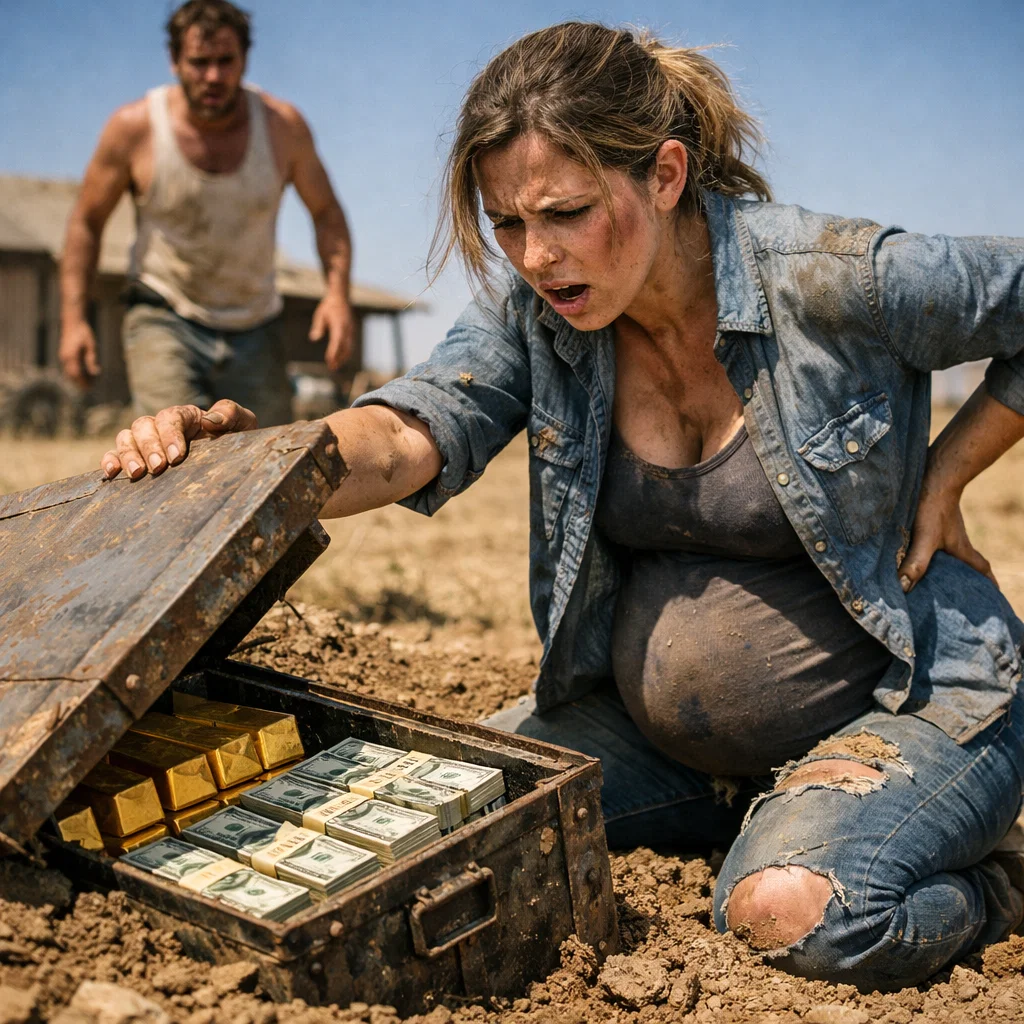
Maricel dropped to her knees and brushed away the dirt with trembling fingers. The soil here was darker, packed differently, as if it had been disturbed once—and then hastily covered again. She dug with her bare hands, ignoring the pain in her palms, the ache in her back, the tightening in her belly. Whatever lay beneath had waited longer than her suffering ever had.
A corner surfaced first—rusted, square.
She pulled harder, widened the hole, until the shape emerged fully: a small metal chest, dented and scarred by time, but undeniably sealed.
Maricel sat back on her heels, breathing hard. Her mind raced through the years—her father’s quiet warnings, his insistence that she know where the boundaries were, how he once buried something “for safety” after a man from the city came asking questions. She had been young then, more interested in the sky than in secrets.
Now the sky had come down to her.
She glanced toward the house. The veranda was empty. Renato and Aling Lorna were inside—probably with the television on—while the world remained perfectly arranged to keep her suffering unseen.
With effort, she dragged the chest to the edge of the field, beneath the shade of the mango tree. The lock was old. One hard strike with a rock snapped it open.
Inside were bundles wrapped in oilcloth. She opened the first with shaking hands.
Documents.
Land titles. Receipts. Old contracts with her father’s signature—and others. A ledger, its pages yellowed, filled with careful handwriting. And beneath it all, wrapped separately, a small cloth pouch heavy with coins and jewelry—her mother’s, perhaps, kept safe for the day illness came and banks felt too far away.
Maricel exhaled when she recognized the names in the ledger. Not only her father’s. Renato’s father. Aling Lorna’s maiden name. Dates. Amounts. Loans left unpaid. Agreements broken quietly—settled not with money, but with pressure.
Her father had known.
He had known what kind of family she was marrying into before she ever said “I do.”
At the bottom of the chest lay one last envelope, thicker than the rest, sealed with wax long cracked by time. Her name was written across it in her father’s hand.
For Maricel. If the day ever comes that you need this.
For Maricel. If the day ever comes that you need this.
She pressed the envelope to her chest, and at last tears came—not loud, not dramatic, but steady and urgent. These weren’t tears of weakness.
They were tears of recognition.
She wiped her face and opened the letter.
My child,
If you’re reading this, it means the world wasn’t gentle with you.
This land isn’t just soil. It’s truth. There will be people who come to take it—using fear, marriage, or a family name. Don’t be afraid. Paper has weight when held by the right hands.
Trust the law, not promises. And don’t let them imprison you in silence.
Maricel closed her eyes.
Renato underestimated many things—
but more than anything, he underestimated the man who raised her.
She carefully rewrapped the chest and buried it again—deeper this time—and marked the spot not with stones, but with memory. Then she returned to work, deliberately slow, deliberately ordinary. By sunset, she looked the way she always did—tired, obedient, empty.
But inside her, something had shifted.
That night she said nothing at dinner. She accepted the absence of food without comment. Silence, she understood now, could be a weapon when chosen—not when imposed.
When Renato finally fell asleep, she waited.
She waited until the house settled into its familiar groans and sighs, until Aling Lorna’s snores marked the hours passing. Then Maricel stood, dressed quietly, and slipped outside with the envelope hidden against her skin.
The town lawyer’s office was small, lit by a single bulb that hummed weakly. Atty. Villanueva was old, half-retired, and known for two things: he hated bullies, and he remembered favors.
He read the papers slowly, his expression tightening with every page.
“This land,” he said at last, looking up at her, “has been disputed before. Quietly. Your father stopped it.”
“Can it be stopped again?” Maricel asked.
He met her eyes.
“Yes. But not quietly.”
Maricel nodded. “I don’t want to be quiet.”
The truck came back—but this time, it didn’t stop in the field.
It stopped at the house.
Maricel watched from the doorway as two men stepped out, accompanied by another wearing sunglasses. Papers were produced. Voices rose. Renato’s confidence cracked—then collapsed completely when the word fraud was spoken out loud.
Aling Lorna stormed out, pale and furious, her authority shattered under the weight of uniforms and official seals.
“What does this mean?” she demanded.
Maricel stepped forward.