
The lanternfly, scientifically known as Lycorma delicatula, is a destructive insect that must be dealt with immediately upon sight. This invasive species originates from China and was first identified in the United States in Pennsylvania in 2014. Since its arrival, the lanternfly has rapidly spread across various regions, causing significant damage to farms, gardens, and the broader environment. Its feeding habits weaken plants and trees, posing a severe threat to agricultural crops and the health of ecosystems.
Lanternflies primarily harm plants by feeding on their sap. They use a specialized needle-like mouthpart to pierce the bark of trees or stems of plants and suck out the nutrient-rich sap. This process not only drains the plant of its energy but also leads to the production of a sticky substance known as honeydew. Honeydew is a byproduct of the lanternfly’s feeding process and creates an ideal environment for sooty mold to grow. Sooty mold is a black, powdery fungus that forms on the honeydew-covered surfaces of plants. This mold blocks sunlight from reaching the leaves, disrupting the photosynthesis process and further weakening the plant. The combined effects of sap removal and sooty mold growth can cause long-term damage to plants, potentially killing them if left unchecked.
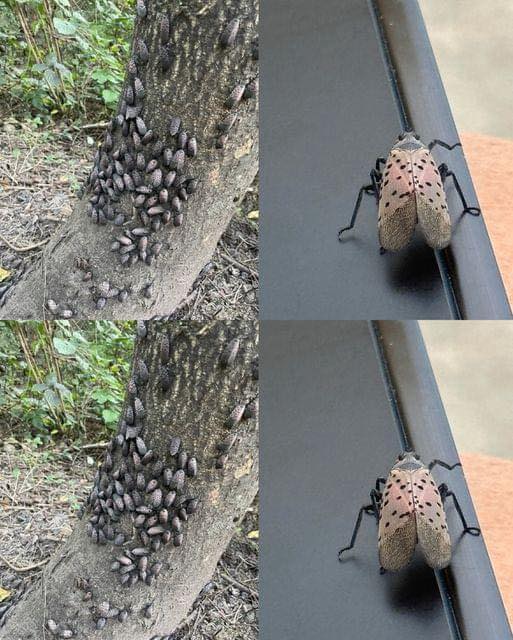
Recognizing a lanternfly is relatively straightforward, as these insects have distinct features. Adult lanternflies are about an inch long, with gray wings covered in black spots. The underside of their wings displays vibrant red and black patterns, making them quite striking. In contrast, the immature stages of the lanternfly, called nymphs, go through several transformations. Initially, they are black with small white spots. As they mature, their coloration changes to red with white spots, accompanied by black markings. Despite their seemingly colorful appearance, lanternflies are a serious threat that requires immediate attention.
If you encounter a lanternfly, taking action is crucial. The most direct way to handle an adult or nymph is to crush it. Physical removal is an effective method to prevent further damage. Additionally, it is vital to address the lanternfly’s egg masses, which are grayish-brown in color and resemble small blobs of mud. These egg masses are often found on tree trunks, rocks, outdoor furniture, and even vehicles. To properly dispose of the eggs, scrape them off using a tool like a credit card or a knife, and place them into a sealable bag containing rubbing alcohol or hand sanitizer. This ensures that the eggs are destroyed and cannot hatch into more lanternflies.
The importance of controlling the lanternfly population cannot be overstated. These insects pose a significant threat to a wide range of plant species, including grapevines, fruit trees, and hardwood trees, all of which are vital to both agriculture and natural ecosystems. The economic impact of a lanternfly infestation can be devastating, as their presence can reduce crop yields and increase the costs associated with pest control measures. Beyond agriculture, the lanternfly also affects homeowners by damaging ornamental plants and creating a mess with their honeydew and sooty mold.
Preventing the spread of lanternflies requires collective effort. Individuals can play a crucial role by reporting sightings of the insect to local agricultural or environmental authorities. Early detection and swift action can help limit their spread and minimize damage. It’s also essential to inspect vehicles, outdoor equipment, and other surfaces for lanternflies or their egg masses, particularly if you are traveling through areas known to have infestations. By doing so, you can help prevent accidental transport of these pests to new locations.
Education and awareness are also critical in the fight against lanternflies. Informing friends, family, and neighbors about the dangers of this invasive species and how to identify and eliminate them can significantly contribute to control efforts. Encouraging local communities to participate in organized eradication efforts can further amplify the impact of individual actions.
The battle against lanternflies is an ongoing challenge, but it is one that we can address through vigilance and collective action. While their striking appearance may catch your eye, it is essential to remember the extensive damage they can cause if left unchecked. By taking prompt and decisive action whenever you see a lanternfly, you are contributing to the protection of plants, crops, and the environment. Together, we can help safeguard our ecosystems and ensure a healthier future for our agricultural and natural landscapes.
Ultimately, the fight against lanternflies is not just about protecting plants; it’s about preserving the balance of our ecosystems and maintaining the beauty and productivity of the environment. Every individual effort, from crushing a single lanternfly to removing egg masses and raising awareness, plays a part in controlling this invasive species. So, the next time you spot a lanternfly, act quickly and decisively—your actions make a difference.
